Different Dry Fruits Compared: Nutrition, Taste & Best Uses (2026)
Not all dry fruits are nutritionally alike — some are protein powerhouses, others are packed with fibre, and a few are mostly natural sugar and energy. Knowing how different dry fruits actually compare helps you build a mix that fits your goals, instead of grabbing whatever’s on sale. Here’s a side-by-side look, plus where to buy quality options at NuttDry.
Different Dry Fruits, Different Nutritional Profiles
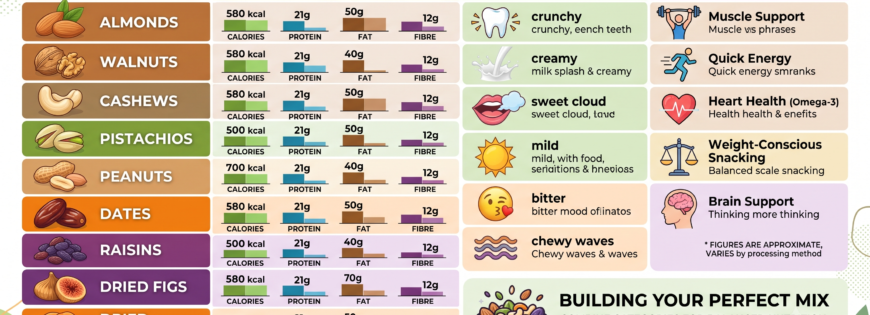
Here’s an approximate nutritional snapshot per 100g:
| Dry Fruit | Calories | Protein | Fat | Fibre |
|---|---|---|---|---|
| Almonds | ~580 kcal | ~21g | ~50g | ~12g |
| Walnuts | ~655 kcal | ~15g | ~65g | ~7g |
| Cashews | ~555 kcal | ~18g | ~44g | ~3g |
| Pistachios | ~560 kcal | ~20g | ~45g | ~10g |
| Peanuts | ~565 kcal | ~26g | ~49g | ~9g |
| Dates | ~275 kcal | ~2g | <1g | ~7g |
| Raisins | ~300 kcal | ~3g | <1g | ~4g |
| Dried Figs | ~250 kcal | ~3g | ~1g | ~10g |
| Dried Apricots | ~240 kcal | ~3g | <1g | ~7g |
Figures are approximate, based on typical dried/raw values, and can vary slightly by brand and processing method.
What the Differences Actually Mean for You
- Nuts (almonds, walnuts, cashews, pistachios, peanuts) are calorie-dense and rich in protein and healthy fats — better for sustained energy and muscle support
- Dried fruits (dates, raisins, figs, apricots) are lower in fat, higher in natural sugars, and often higher in specific micronutrients like potassium and iron
- Fibre content varies widely even within categories — almonds and figs are notably higher in fibre than cashews or raisins
Different Dry Fruits for Different Goals
- Weight-conscious snacking – dried figs and apricots offer fibre and flavour at a lower calorie cost than most nuts
- Protein and muscle support – peanuts, almonds, and pistachios lead this category
- Quick, natural energy – dates and raisins are ideal before a workout or a busy afternoon
- Heart health – walnuts stand out for their omega-3 fatty acid content
Taste and Texture Differences
Beyond nutrition, different dry fruits bring very different eating experiences:
- Almonds and pistachios – crunchy, mild, versatile
- Cashews – creamy, subtly sweet
- Walnuts – crunchy with a slightly bitter edge
- Dates and raisins – soft, chewy, naturally sweet
- Dried figs and apricots – chewy with a concentrated, fruity sweetness
Choosing the Right Mix of Different Dry Fruits
Rather than picking just one, combining categories usually gives the most balanced nutrition — a few nuts for protein and healthy fats, paired with one or two dried fruits for fibre and natural sweetness.
Where to Buy a Range of Different Dry Fruits Online
At NuttDry, every variety is handpicked, hygienically packed, and 100% natural:
- Nuts & Seeds – almonds, cashews, walnuts, pistachios, and more
- Dates – including premium Ajwa and Kalmi (Safawi) dates
- Combos – curated packs combining multiple varieties
For deeper dives into specific dry fruits, check out:
FAQs About Different Dry Fruits
Which dry fruit has the most protein? Peanuts and almonds are among the highest in protein per 100g, compared to most dried fruits.
Which dry fruit is lowest in calories? Dried figs and apricots tend to be lower in calories than most nuts, though still calorie-dense compared to fresh fruit.
Should I eat different dry fruits together or stick to one kind? A mix is generally better — combining nuts and dried fruits gives you a broader range of nutrients than relying on just one.
Where can I buy a variety of natural dry fruits online in India? You can shop a wide range of handpicked, 100% natural dry fruits at NuttDry, with free delivery across India.
Conclusion
Different dry fruits bring different strengths to the table — some built for protein, others for fibre or quick energy. The smartest approach is usually a mix, not a single favourite. Explore the full range of handpicked, 100% natural dry fruits at NuttDry — browse Nuts & Seeds, Dates, or our Combos.